

Ghee—often referred to as “liquid gold” in Indian households—has long been a symbol of nourishment, tradition, and wellness. From being a sacred offering in religious rituals to an indispensable part of grandma’s kitchen remedies, ghee has transcended centuries. But with modern diets questioning fats and their role in health, many are now asking: Is ghee really good for health?
In this article, we’ll explore the origins of ghee, its nutritional profile, scientifically backed health benefits, myths and facts, and how you can incorporate it into your daily routine for optimal wellness.
What is Ghee? A Brief Origin Story
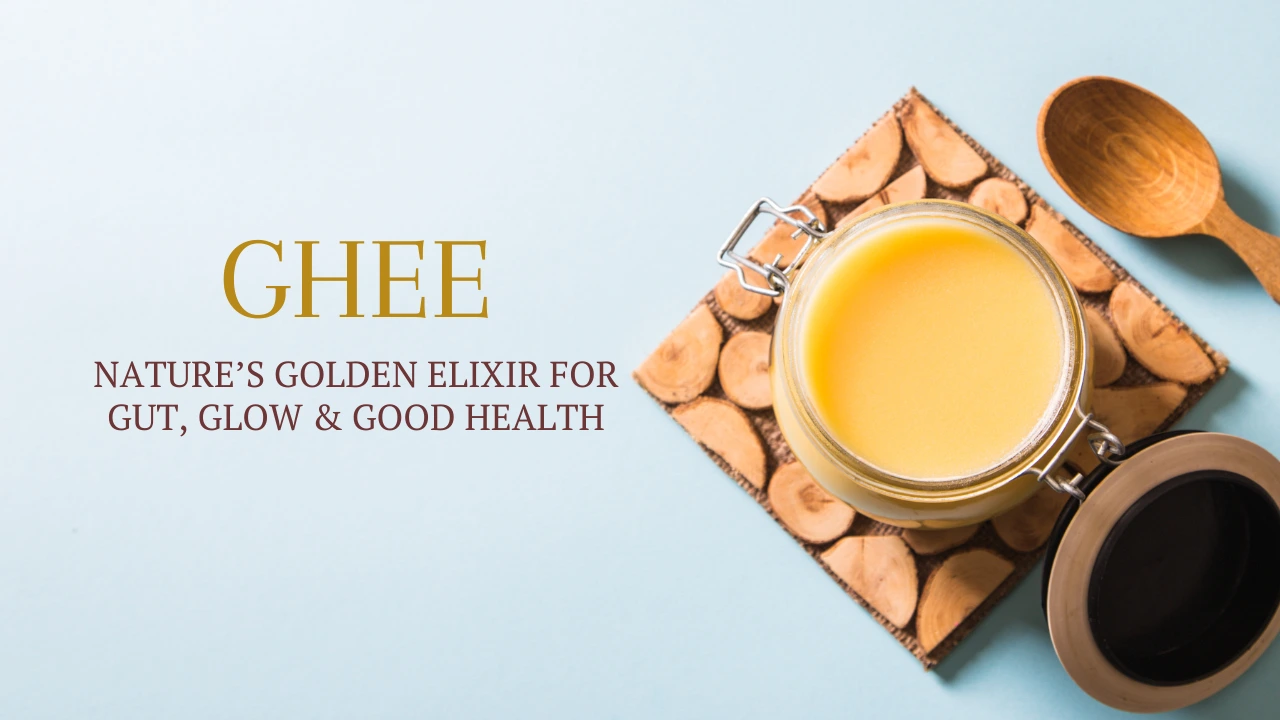
Ghee is a type of clarified butter made by simmering unsalted butter to remove its water content and milk solids. What remains is a rich, golden liquid with a nutty aroma and high smoke point. Ghee has its origins in ancient India and has been a cornerstone of Ayurvedic medicine for thousands of years.
In Ayurveda, ghee is considered a “sattvic” food—meaning it promotes clarity, peace, and balance. It is believed to nourish the mind, improve digestion, and serve as a vehicle for delivering herbs deep into tissues.
Nutritional Value of Ghee (Per 1 tablespoon or approx. 13g)
- Calories: 112
- Total Fat: 12.7g
- Saturated Fat: 7.9g
- Monounsaturated Fat: 3.7g
- Polyunsaturated Fat: 0.5g
- Vitamin A: 13% of the RDI
- Vitamin E: 2% of the RDI
- Vitamin K2: Trace amounts (vital for calcium metabolism)
- Conjugated Linoleic Acid (CLA): Known for anti-cancer and fat-burning properties
- Butyrate: A short-chain fatty acid beneficial for gut health
Health Benefits of Ghee
Ghee is far more than just a traditional fat used in Indian cooking—it’s a nutrient-rich functional food that supports the body on multiple levels. Modern research now validates what Ayurveda has claimed for centuries: when consumed in moderation and prepared traditionally, ghee offers a range of powerful health benefits that make it a superior alternative to many refined fats.
Promotes Optimal Digestive Health
One of the standout benefits of ghee lies in its ability to support digestion. It is rich in butyric acid, a short-chain fatty acid known for promoting the health of intestinal walls and nourishing colon cells. Butyric acid also helps reduce inflammation in the digestive tract, making it beneficial for individuals suffering from irritable bowel syndrome (IBS) and other inflammatory bowel conditions. Unlike other oils that can slow down digestion, ghee stimulates the secretion of gastric acid, aiding in better breakdown and absorption of food.
Strengthens Immunity from Within
Ghee is a natural carrier of fat-soluble vitamins A, D, E, and K, which play a vital role in maintaining immune function, vision, bone health, and hormonal balance. These vitamins require fat for absorption, and ghee offers the perfect medium. Additionally, its antioxidant properties help neutralize free radicals, reducing oxidative stress and supporting the body’s immune defenses. Ayurveda even considers ghee a rasayana—an immunity-boosting and rejuvenating substance that promotes longevity and vitality.
Supports Cardiovascular Health
Although ghee is rich in saturated fats, it also contains significant levels of monounsaturated fats and omega-3 fatty acids, which are known to support heart health. Furthermore, the presence of conjugated linoleic acid (CLA) has been linked to reduced inflammation and improved cholesterol ratios. CLA helps lower bad cholesterol (LDL) while increasing good cholesterol (HDL), which may reduce the risk of heart disease when ghee is consumed in moderation. Its natural unprocessed form also makes it a safer choice than heavily refined oils.
Enhances Cognitive Function and Brain Health
Ghee is often referred to as brain food in traditional Ayurveda, and for good reason. The healthy fats present in ghee are essential for brain development and functioning. They form the building blocks of neuronal membranes, aiding in better communication between brain cells. Ghee also supports the production of neurotransmitters and is believed to enhance memory, concentration, and emotional balance. This is particularly beneficial for children, students, and the elderly.
Provides Sustainable Energy and Physical Strength
Ghee is a dense source of energy and is often recommended in high-energy diets, especially for athletes, children, postpartum mothers, and individuals recovering from illness. Unlike carbohydrates that give a quick spike and drop in energy levels, the medium-chain fatty acids in ghee are metabolized more slowly, providing long-lasting energy without the crash. These fats are directly absorbed by the liver and converted into energy rather than being stored as fat.
Balances Hormones and Supports Reproductive Health
Hormones are synthesized using cholesterol and healthy fats, both of which are found in ghee. The presence of fat-soluble vitamins, particularly vitamin K2 and vitamin E, helps in hormone regulation, making ghee beneficial for women facing hormonal imbalances, PCOS, or menopause symptoms. For men, ghee supports testosterone production and overall vitality. It is also widely used in Ayurvedic preparations for fertility and reproductive wellness.
Improves Skin Texture and Radiance
The benefits of ghee are not limited to internal health—it’s a natural beauty enhancer too. Ghee nourishes the skin from within, giving it a soft, glowing texture. The fatty acids and antioxidants help reduce dryness, delay signs of aging, and promote skin repair. It is also applied topically in Ayurveda to treat chapped lips, burns, and minor wounds due to its antibacterial and anti-inflammatory properties.
Aids in Detoxification and Liver Function
Ghee is often used in Ayurvedic cleansing practices like Panchakarma. Its ability to bind with toxins in the body makes it an excellent agent for detoxification. Ghee travels deep into tissues and carries herbs and nutrients while flushing out fat-soluble toxins. It supports liver function by reducing oxidative stress and helping the organ perform its detoxifying role efficiently.
Soothes Inflammation and Joint Pain
Thanks to its high butyrate content and antioxidant profile, ghee has strong anti-inflammatory properties. It is often used as part of the treatment for arthritis and joint pain. Its lubricating effect benefits the joints, improving flexibility and reducing stiffness. Regular consumption may help those with chronic pain conditions or inflammatory diseases.
Safe for People with Dairy Intolerance
Unlike butter, ghee is free from lactose and casein, the two main dairy allergens. During the clarification process, milk solids are removed, making it easier to digest for individuals who are lactose intolerant or sensitive to dairy. It is a dairy-derived fat that even those with mild dairy intolerance can often tolerate well.
Enhances Absorption of Nutrients
Ghee acts as an excellent carrier for herbal and medicinal compounds, a property known as “yogavahi” in Ayurveda. It enhances the bioavailability of nutrients and medications by transporting them deep into body tissues. This is why it is used to prepare medicated ghee (ghritas) in Ayurveda, which target specific health issues like digestion, fertility, and mental clarity.
Types of Ghee
- Cow Ghee: Made from the milk of desi (native Indian) cows like Gir or Sahiwal, it is considered the most sattvic and nourishing.
- Buffalo Ghee: Richer in fat and heavier than cow ghee; often used for winter nourishment.
- A2 Ghee: Derived from A2 milk (a specific protein variant found in Indian cows), this type is gaining popularity for its digestibility and premium quality.
- Cultured Ghee: Made by fermenting cream or curd, making it lactose-free and probiotic-rich.
- Herbal Ghee (Medicated Ghee): Infused with Ayurvedic herbs for targeted healing (e.g., Brahmi ghee for memory, Triphala ghee for digestion).
Common Myths About Ghee
- Myth 1: Ghee is fattening.
Fact: When used in moderation, ghee aids in fat metabolism and doesn’t lead to weight gain. - Myth 2: Ghee raises cholesterol.
Fact: It may actually help improve the HDL/LDL ratio. - Myth 3: Ghee is the same as butter.
Fact: Ghee is clarified and free of lactose and casein, making it suitable for dairy-sensitive individuals.
How Much Ghee is Good for You?
Moderation is key. Most dietitians recommend 1-2 teaspoons of ghee per day for adults. You can cook with it, spread it on roti, or add it to dal or rice.
For kids, ghee is a great source of fat for brain development. For postpartum mothers, it helps in tissue healing and energy replenishment.
Ghee in Ayurveda: More Than Just Food
In Ayurveda, ghee is revered not just as a culinary ingredient but as a sacred substance—a potent healer, a carrier of herbs, and a symbol of nourishment. Known as ghṛta, ghee is considered a “sattvic” food, which means it promotes clarity, peace, and positive energy in the body and mind.
A Balancer of Doshas
According to Ayurvedic texts, ghee balances all three doshas—Vata, Pitta, and Kapha—when used appropriately. It’s particularly beneficial for calming Vata (dryness and nervous energy) and Pitta (heat and inflammation). Ghee’s moist, cooling, and unctuous nature helps restore equilibrium in the body, making it ideal for those suffering from dryness, heat, and inflammation-related imbalances.
Deep Tissue Nourishment (Snehana)
Ayurveda uses ghee as a base in many internal and external therapies. In Panchakarma detox treatments, ghee is taken internally (snehapana) to prepare the body for cleansing. It penetrates deep into tissues, lubricates joints, enhances absorption, and pulls out toxins from cellular structures—a process known as oleation.
Carrier for Herbal Medicine (Yogavahi)
Ghee is often used as an anupana (carrier substance) for Ayurvedic herbs. It enhances the potency and absorption of medicinal herbs by carrying them deep into tissues. Herbs like Brahmi, Ashwagandha, and Shatavari are often infused in ghee for targeted healing.
Mental Clarity and Cognitive Health
Ayurveda holds that ghee nourishes the ojas (vital life energy), which supports immunity, vitality, and mental well-being. A spoonful of ghee daily is believed to sharpen memory, improve focus, and support emotional stability.
Ritual and Sacred Use
In Vedic rituals, ghee is offered into sacred fire (Agni) as a symbol of devotion and transformation. Just as fire purifies, ghee is believed to purify the body and soul. It’s often used in religious ceremonies and traditional Ayurvedic cooking to enhance both the taste and the spiritual vibration of food.
Ghee is also used as a carrier (anupan) for Ayurvedic herbs like Ashwagandha, Brahmi, and Shatavari, enhancing their absorption and efficacy.
Who Should Avoid Ghee?
While ghee has many health benefits, it may not be suitable for everyone. Here are some groups who should avoid or limit its intake:
People with Heart Conditions:
Ghee is high in saturated fats. If you have high cholesterol or heart disease, excess ghee may worsen your condition. Use it only if approved by your doctor.
Those Trying to Lose Weight:
Ghee is calorie-dense. If you’re on a weight-loss journey, use it sparingly to avoid adding extra calories and fat.
Individuals with Liver Disorders:
Liver issues like fatty liver or jaundice require a low-fat diet. Ghee can burden the liver and should be avoided unless medically advised.
People with Severe Dairy Allergies:
Though ghee is low in lactose, trace milk proteins may remain. If you’re allergic to dairy, it’s best to avoid ghee unless certified lactose-free.
Those with Digestive Sensitivities:
People with conditions like pancreatitis or gallbladder issues may not tolerate high-fat foods. Ghee could worsen symptoms.
How to Choose the Best Ghee
- Look for grass-fed, organic ghee made from desi cow milk.
- Choose A2-certified ghee if available.
- Avoid ghee with additives or preservatives.
- Traditional bilona-churned ghee retains more nutrients than commercially made ghee.
Final Thoughts: Is Ghee Good for You?
Absolutely—when used in the right quantity and sourced from quality ingredients, ghee is one of the healthiest fats you can include in your diet. Its benefits range from improved digestion and heart health to radiant skin and mental clarity. In a world filled with processed oils and artificial ingredients, ghee stands as a natural, time-tested remedy that truly earns its title as the golden elixir.
So yes, ghee is not just good—it’s great for your health when used wisely.
Is Ghee Right for You? FAQs That Clear the Confusion
Yes, when consumed in moderation, ghee is considered healthier than regular butter or refined oils. It contains healthy saturated fats and is rich in fat-soluble vitamins like A, D, E, and K. Unlike butter, ghee is lactose-free and casein-free, making it suitable for those with dairy sensitivities.
Absolutely. Ghee is known to stimulate the secretion of digestive enzymes and aids in better absorption of nutrients. It also contains butyrate, a short-chain fatty acid that supports gut health and reduces inflammation.
Yes. During the preparation of ghee, milk solids are removed, which eliminates most of the lactose and casein. This makes pure ghee generally safe for people with lactose intolerance, but those with severe dairy allergies should still consult a healthcare provider.
Like any fat, ghee is calorie-dense and should be consumed in moderation. However, the healthy fats in ghee may promote satiety and prevent overeating. It can actually support weight management when used mindfully within a balanced diet.
Yes. Ghee has a high smoke point of around 250°C (485°F), making it ideal for sautéing, frying, and baking without breaking down into harmful compounds like some oils do at high heat.
No. Ghee is an animal-derived product made from butter and is not suitable for a vegan diet.
Ayurvedic ghee, often prepared from indigenous cow’s milk and processed traditionally, is believed to carry additional medicinal properties. It’s used in various Ayurvedic therapies and as a carrier for herbal formulations.

Add comment